Dr Nick Lloyd
BVSc MRCVSChief Veterinary Officer at Lupa
Dr Nick Lloyd BVSc MRCVS is the Chief Veterinary Officer at Lupa, and the former president of the Society of Practising Veterinary Surgeons (SPVS).
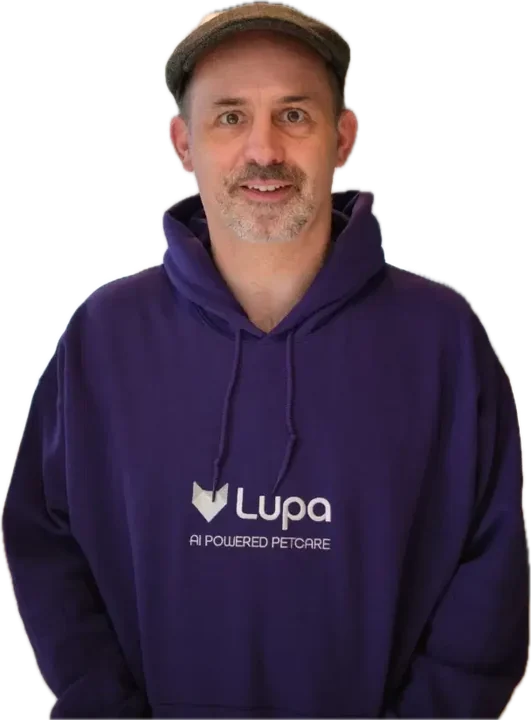
- Past RoleOwner, Kingsteignton Veterinary Group
- 2021 — 2022President — Society of Practising Veterinary Surgeons (SPVS)
- ChairVet XML Consortium
- On the Lupa blog24 articles
About Nick
Nick Lloyd is a veterinary surgeon and Lupa's Chief Veterinary Officer. His job is to make sure what Lupa builds reflects how practices actually work; the clinical realities, the admin pressure, and the decisions that determine whether a day runs smoothly or doesn't.
He qualified from the University of Bristol and spent 16 years in practice in Devon, including as owner of Kingsteignton Veterinary Group. When he left clinical work in 2018 he moved into veterinary IT, working inside IVC Evidensia's technology team before building his own consultancy.
Nick served as President of the Society of Practising Veterinary Surgeons (SPVS) in 2021 to 2022, chaired the Vet XML Consortium, and has contributed to the RCVS Workforce Summit and the BVA's Vet Record. He co-presented the SPVS CMA Veterinary Remedies podcast with Pete Orpin on the regulatory changes most likely to affect independent practices, and has spoken about veterinary technology and practice management on the Veterinary Innovation Podcast.
That background shapes what he writes about: not what software can theoretically do, but what it takes for a practice to change systems, embed new tools, and actually see the benefit.
Articles by Nick
- Read article
How to introduce new technology in your veterinary practice
The best way to introduce new technology in a veterinary practice is to let your team name the problem, trial one solution for four weeks with a champion leading it, remove the old way of doing things, and then review what worked before you roll it out further.
- Read article
How to handle a client complaint in a veterinary practice
How to handle a veterinary client complaint: the first conversation, checking the record, CMA Order timescales, the response letter and mediation.
- Read article
How to manage conflict in a veterinary team
How to manage conflict in a veterinary team: work out what kind of problem it is, when to talk informally, and when a formal route or mediation fits.
- Read article
How to communicate a price increase to veterinary clients
A fee change is harder to explain when the first time a client sees it is on an invoice. What the CMA Order requires, how much notice to give, and what the message needs.
- Read article
What to check before moving a veterinary practice from server software to the cloud
A practice server may run more than the PIMS. What to identify, extract, retain and replace before a legacy server can be switched off safely.
- Read article
AI veterinary practice management software: what to evaluate beyond the scribe
AI in a veterinary PIMS now covers documentation, communication, billing and records. What matters is the task the AI performs, how its output gets checked, and what happens when it is wrong.
- Read article
Veterinary SOAP notes: how to write them, with a free template
A practical guide to writing veterinary SOAP notes from Lupa's Chief Veterinary Officer. What goes in each section, a worked example, what your state board expects, and a free template.
- Read article
Online booking for veterinary practices: what clients want
Client booking preferences are shifting fast. Here is what the evidence shows clients want, and where most practice booking systems still fall short.
- Read article
How veterinary practices can improve online reviews and build client trust
Most clients decide whether to trust a practice before they ever speak to anyone there. Here is what actually shapes that decision online, and how to manage reviews without overstepping client confidentiality.
- Read article
RCVS practice standards in 2026: what UK veterinary practices need to know
RCVS PSS accreditation is voluntary, but many Core Standards reflect wider obligations for UK veterinary practices. Here is what every practice should be meeting in 2026, and where independent practices most often fall short.
- Read article
The hidden cost of vet staff turnover (and what to do about it)
Staff turnover costs more than a recruitment fee. Here is how resignation affects cover, productivity, client relationships and the team left behind.
- Read article
How to switch veterinary PIMS without disrupting your practice
Switching practice management systems carries real risk to a busy clinic. Here is what actually happens during a PIMS migration, what tends to go wrong, and how to keep your practice running while it does.
- Read article
CMA pricing transparency: how to get your practice compliant before the deadlines
The CMA Order is expected by September 2026. For most independent practices, pricing transparency compliance is required by March 2027 and written estimates by September 2027. Here is what to prepare, and in what order.
- Read article
How to set up a veterinary practice in the UK: the complete guide
A practical guide to setting up a veterinary practice in the UK, covering RCVS registration, premises, controlled drugs, staffing, finance, and the decisions that matter most in year one.
- Read article
The cost of starting a veterinary practice in the UK in 2026
A realistic breakdown of what it costs to open an independent veterinary practice in the UK: premises, equipment, registration, working capital, and the financing structures commonly used.
- Read article
AI scribe accuracy in practice: what six months of daily use actually showed
AI scribe accuracy is not just a vendor percentage. Here is what sustained daily use in a busy practice showed, including where the technology earned trust and where it still needed a second look.
- Read article
Veterinary scheduling software: what matters when you're choosing
Veterinary scheduling software should do more than display a diary. Here is how to assess online booking, appointment types, reminders, room visibility and workflow fit before choosing.
- Read article
How much time does a veterinary AI scribe save?
Vendors quote different time-saving figures for AI scribes. This guide explains why the real saving depends on caseload, documentation habits, review effort and workflow fit.
- Read article
Veterinary AI scribe and GDPR: what UK practices need to know
AI scribes record client conversations in your consult room. Here is what UK GDPR requires from veterinary practices, what the RCVS now expects, and the questions to ask before you sign a contract.
- Read article
How to improve appointment compliance in a veterinary practice
Booked appointments are not the same as appointments that lead to care. Here is how to close the gap between what clients agree to and what they actually follow through on.
- Read article
What the new CMA prescription fee cap means for your practice
Everything you want to know on the new CMA prescription fee cap. Key dates, what it means for your income, formulary, and client conversations.
- Read article
CMA veterinary remedies 2026: a plain-English guide for independent practices
The CMA confirmed 14 binding remedies in March 2026, enforceable from September 2026. Here is what each one means for an independent practice, in plain English, without the legal framing.
- Read article
How to reduce vet burnout: what practice owners can actually do
Veterinary burnout is well documented, but practice owners need more than generic wellbeing advice. Here is how to reduce vet burnout by improving workload, admin, rotas and team support.
- Read article
How to reduce no-shows in a veterinary practice
Most no-shows are not clients who forgot. They are clients who decided the appointment was not urgent enough. Here is how to address that, from the consultation room to the booking system.
Nick Lloyd BVSc MRCVS is Chief Veterinary Officer at Lupa. His articles draw on clinical experience and sector knowledge built across practice ownership, IT consultancy, and industry engagement. They do not constitute clinical or legal advice.